
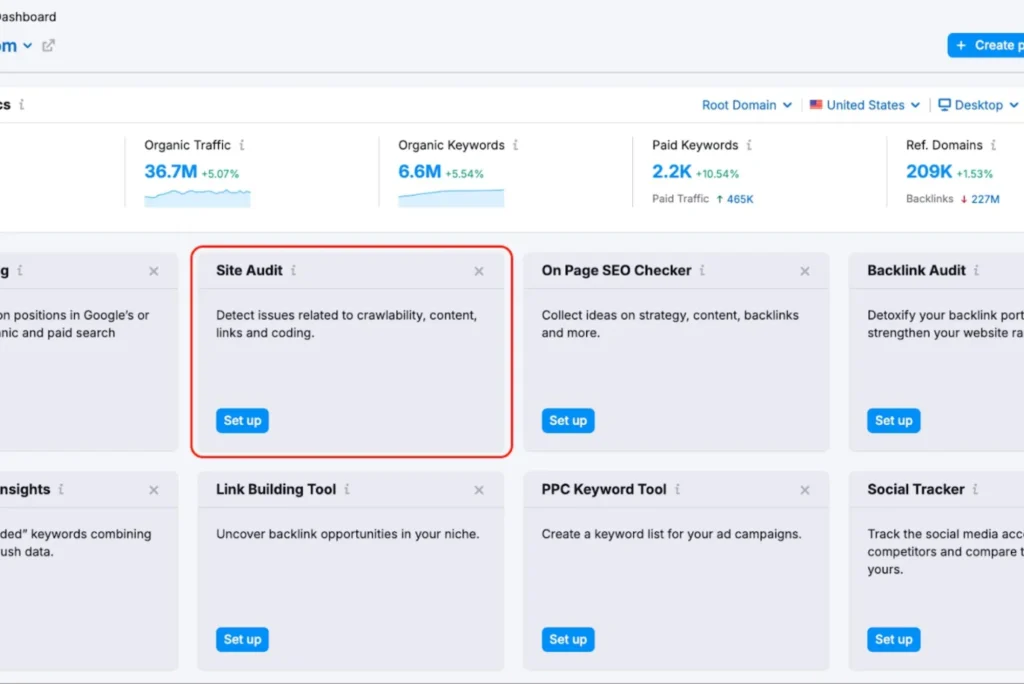
Running a small business website without ever auditing it is a bit like driving with a cracked windscreen — you can still move forward, but you are missing critical information that could get you into trouble. SEO audit tools solve this problem by scanning your entire website and surfacing the technical issues, content weaknesses, and missed opportunities that are quietly holding your rankings back. In 2026, these tools have become smarter, more affordable, and more accessible than ever, making them an essential part of any small business digital strategy.
This guide covers the most effective SEO audit platforms available this year, what they actually reveal, and how to use their findings to fix real problems — without needing to hire an agency or possess deep technical expertise.
What Is an SEO Audit and Why Does It Matter?
An SEO audit is a comprehensive evaluation of your website’s ability to appear in search engine results. It examines everything from page speed and mobile usability to missing meta descriptions, broken links, duplicate content, and keyword gaps. The goal is not simply to generate a list of errors — it is to identify which issues are most damaging to your rankings and which fixes will deliver the fastest improvement.
For small businesses, the value of a regular audit is twofold. First, it catches problems before they compound — a single broken redirect or missing canonical tag can cascade into a wider indexing issue over time. Second, it consistently surfaces easy wins: pages that are ranking on page two and could be optimised to reach page one with relatively minor changes, or pages with thin content that could be expanded to attract additional traffic.
Top SEO Audit Tools for Small Businesses in 2026
The market offers a wide range of audit tools, from free browser extensions to comprehensive paid platforms. Below is a comparison of the most practical options for small business owners.
| Tool | Best For | Starting Price | Key Audit Features |
|---|---|---|---|
| Google Search Console | Core indexing and performance data | Free | Coverage errors, Core Web Vitals, manual actions, page performance |
| Screaming Frog SEO Spider | Full technical crawl | Free (up to 500 URLs) / £259/year paid | Broken links, redirect chains, duplicate content, missing tags |
| Semrush Site Audit | Comprehensive on-page and technical auditing | $139/month | 130+ checks, issue prioritisation, crawlability, internal linking |
| Ahrefs Site Audit | Technical health and content issues | $129/month | Health score, page explorer, crawl log, performance trends |
| SE Ranking | Affordable all-in-one auditing | $52/month | Page-level analysis, structured data checker, speed insights |
| Sitebulb | Visual audit reports for non-technical users | $14/month | Priority hints, visual crawl maps, accessibility checks |
| Ubersuggest | Entry-level audit for beginners | $12/month | Site health score, on-page SEO analysis, backlink overview |
What a Good SEO Audit Actually Reveals
Not all audit tools surface the same depth of information. The most useful platforms break findings into categories that map directly to actionable improvements. Understanding what each category covers helps you prioritise your time and effort effectively.


Technical SEO Issues
These are the structural problems that affect how search engines crawl and index your site. Common findings include pages blocked by robots.txt, URLs returning 404 errors, slow page load times, missing HTTPS certificates, and improper use of canonical tags. Technical issues are often the most urgent to fix because they can prevent pages from appearing in search results entirely, regardless of how well-written the content is.
On-Page Optimisation Gaps
On-page gaps are found at the individual page level. A quality audit tool will flag pages with missing or duplicate title tags and meta descriptions, images lacking alt text, thin content below a meaningful word count threshold, and heading structures that do not follow a logical hierarchy. Each of these represents a direct opportunity to strengthen how a page communicates its topic to both users and search engines.
For businesses managing local service pages, product listings, or company directory entries, addressing on-page gaps is often the fastest route to measurable ranking improvements. Staying current with guidance from resources covering technology and digital strategy can help small teams implement these fixes more efficiently.
Content Gap Analysis
Content gaps are topics and keywords your competitors rank for that your site does not yet cover. Advanced audit tools cross-reference your existing content against competitor pages and suggest the subjects worth creating or expanding. This is particularly valuable for businesses that have built a site around core service pages but have not yet developed supporting blog or resource content to capture informational search traffic.
Internal Linking Weaknesses
An audit will also map your internal link structure and highlight orphaned pages — those with no internal links pointing to them — as well as pages that receive too few links relative to their importance. Correcting internal linking issues is one of the highest-value, lowest-cost improvements available, as it helps distribute page authority more evenly across the site and improves crawl depth for deeper pages.
How to Run Your First SEO Audit: A Practical Approach
Many small business owners feel overwhelmed when they first open an audit report and are confronted with hundreds of flagged issues. The key is prioritisation, not panic. Here is a sensible sequence for working through audit findings:
Fix critical errors first: These are issues that directly prevent indexing — blocked pages, server errors, and broken canonical tags. Most audit tools label these as high priority or critical.
Address warnings next: Warnings include slow pages, missing meta descriptions, and images without alt text. These may not break your site, but they reduce ranking potential.
Optimise for easy wins: Look for pages ranking in positions 8 to 20. These are within reach of page one and often need only targeted content improvements, better internal linking, or a refined title tag to move up.
Fill content gaps: Use gap analysis data to plan new content that addresses topics your competitors cover but your site does not.
Monitor regularly: Schedule audits quarterly at minimum. Many tools offer automated crawling so you receive alerts when new issues appear.
Free vs Paid SEO Audit Tools: Which Is Right for You?
The free tools available in 2026 are genuinely capable, particularly for businesses just starting out. Google Search Console alone provides critical data on indexing status, Core Web Vitals performance, and which queries are driving clicks. Paired with the free tier of Screaming Frog, a small business owner can conduct a thorough technical audit at no cost.
That said, paid platforms deliver a meaningfully higher level of insight, particularly around competitor benchmarking, content gap identification, and automated issue monitoring. For growing businesses managing more than a handful of pages, the investment in a mid-tier paid tool — typically in the $50 to $140 per month range — pays for itself quickly in time saved and traffic gained.
The decision often comes down to the size of your site and how frequently you need to audit it. A local business with a ten-page website can manage well with free tools. An e-commerce store or service business with dozens of landing pages and a blog will benefit considerably from a dedicated audit platform. Businesses exploring their digital growth strategy should factor audit tool costs into their broader marketing budget planning.
| Business Type | Recommended Tool Tier | Audit Frequency |
|---|---|---|
| Local service business (under 20 pages) | Free tools (GSC + Screaming Frog) | Every 6 months |
| Small e-commerce (20–100 pages) | Entry-level paid (Ubersuggest, Sitebulb) | Quarterly |
| Growing content site (100+ pages) | Mid-tier paid (SE Ranking, Ahrefs) | Monthly |
| Multi-location business or agency | Enterprise-level (Semrush, Ahrefs Pro) | Continuous monitoring |
Common Mistakes Small Businesses Make With SEO Audits
Having access to an audit tool is not enough on its own. The most common mistake is treating the audit report as a checklist to be completed in one go, then ignored until the following year. SEO is dynamic — search engine algorithm updates, new competitor content, and changes to your own site all introduce new issues on a regular basis.
Another frequent error is focusing exclusively on technical fixes while neglecting content quality. A perfectly crawlable website with thin, uninformative content will still struggle to rank competitively. The most effective small business SEO strategies address both dimensions simultaneously: fixing what is broken while continuously improving what is published.
Finally, many businesses overlook the importance of local SEO signals in their audits. For service-area businesses, audit tools should be used in combination with Google Business Profile data to ensure that local landing pages are properly optimised for geographic intent. For companies operating in the UAE market, understanding how audit findings apply to both Arabic and English content can make a significant difference in local search visibility. Reference resources from authoritative SEO platforms [Insert relevant reference link here] to stay updated on best practices specific to regional markets.
Turning Audit Data Into Ongoing Improvements
The long-term value of SEO audit tools lies not in a single scan but in the habit of regular review. Businesses that audit consistently develop a much clearer picture of which pages are performing, which are declining, and where new opportunities are emerging. Over time, this creates a compounding effect: each round of improvements builds on the last, gradually strengthening the site’s overall authority and relevance.
For small businesses with limited time, the most practical approach is to dedicate a set number of hours each quarter specifically to acting on audit findings. Even two to three hours of focused optimisation work, guided by a clear priority list from your audit tool, can produce meaningful results within a few months. Businesses exploring available IT maintenance and support services will recognise the same principle: regular proactive attention prevents the kind of large-scale problems that are far more costly to fix reactively.
Frequently Asked Questions
How often should a small business run an SEO audit?
At minimum, a full site audit should be conducted every three to six months. Businesses that publish new content regularly or make frequent site changes benefit from monthly crawls. Automated monitoring tools can flag critical issues in real time between scheduled audits.
Can I run an SEO audit without technical knowledge?
Yes. Tools like Sitebulb and Ubersuggest are specifically designed for non-technical users, presenting findings in plain language with clear explanations of why each issue matters and how to fix it. Google Search Console also provides straightforward guidance on indexing and performance problems.
What is the most important thing an SEO audit reveals?
For most small business websites, the most impactful findings are pages with thin or duplicate content, missing or poorly written title tags and meta descriptions, and pages close to page one that need minor optimisation. These represent the clearest path to quick, measurable ranking improvements.
Are free SEO audit tools accurate?
Free tools like Google Search Console provide highly accurate data directly from Google’s own systems, making them reliable for indexing and performance insights. Free versions of crawling tools like Screaming Frog are equally accurate, though limited in the volume of pages they can scan. For comprehensive analysis across larger sites, paid tools offer a more complete picture.
What is a content gap and how does an audit find it?
A content gap is a topic or keyword that competing websites rank for but your site does not address. Audit tools identify content gaps by comparing your site’s ranking keywords against those of your top competitors, then highlighting the queries that represent untapped traffic opportunities for your niche.
Final Thoughts
SEO audit tools have become one of the most practical investments available to small businesses in 2026. They remove the guesswork from digital optimisation by showing exactly where your site falls short and which improvements will have the greatest impact. Whether you start with free tools or invest in a mid-tier platform, the important thing is to start — and to make auditing a regular part of how you manage your online presence.
A well-audited website is one that grows more competitive over time, consistently capturing the search traffic that drives real business results. The tools exist; the data is waiting. The only thing left is to act on it. For businesses looking to improve their overall digital footprint in competitive markets, combining regular SEO audits with a broader technology and IT strategy is the most sustainable path to long-term online growth.
Related Reading: What Are SEO Tools for Small Businesses and Which Features Matter Most in 2026? — full guide
Related Reading: The Modern Laser Machine: A Complete Guide for Businesses and Creators