A shaded outdoor space is what turns a villa garden or a rooftop terrace from unusable to lived in for most of the year. The challenge is that a pergola Dubai conditions demand has to survive sustained heat, occasional heavy rain and salt carried inland on the breeze, all while still looking considered. This guide covers the design formats worth shortlisting, how the main materials actually behave in this climate, and the cost you should realistically budget, with product guidance from Floorna.
Pergola Dubai Designs Worth Considering
1. Attached Pergola Dubai Structures
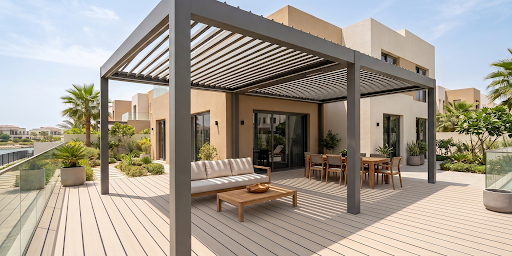
Fixed to an existing wall along one side, these suit villa terraces and townhouse gardens where the structure extends the indoor living space outward. They use fewer posts, which keeps sightlines clean and the footprint tidy.
2. Freestanding Structures
Independent of the building, so they can sit anywhere in a garden or on a rooftop. This format works well for a dining zone or a poolside lounge that you want read as its own destination rather than an extension of the house.
3. Louvered and Adjustable Roofs
Rotating blades let you control shade through the day and close the roof against rain. They cost considerably more than a fixed slatted roof, but they extend usable hours in shoulder seasons meaningfully.
Which Material Holds Up in the Heat?
1. Wood Plastic Composite
The practical answer for most residential projects. It delivers the grain and warmth of timber without splintering, rotting or needing annual sealing, and it handles humidity and washing down without swelling. The WPC pergolas range covers supply and installation.
2. Aluminium
Light, strong and fully weatherproof, and the usual base for motorised louvered systems. The finish carries the aesthetic entirely, so powder coating quality matters more than the metal itself.
3. Natural Timber
Beautiful when new and demanding thereafter. Sun and humidity work against untreated wood quickly here, and the maintenance schedule is real rather than theoretical.
Pergola Dubai Costs and What Drives Them
As an indicative range, a fixed composite or aluminium structure supplied and installed typically falls between AED 900 and AED 2,500 per square metre. Motorised louvered systems usually start well above that, often from AED 2,500 upward depending on span, automation and finish. Span is the biggest cost driver, because wider unsupported openings need heavier sections. Foundations, electrical work for lighting or fans, and the flooring beneath all sit outside the headline rate. Ask for an itemised quotation covering the frame, the roof treatment, the fixings and the groundworks separately, since a single rate per square metre hides exactly the lines that vary most between suppliers. Many projects pair the structure with WPC decking in Dubai so the deck and the pergola share one material language.
What Should You Check Before Ordering?
Confirm whether your community or building requires approval for a permanent structure, since rules differ between developments and retrofitting a rejected design is expensive. Check the fixing method against your substrate, particularly on rooftops where waterproofing membranes must not be punctured carelessly. Ask for the wind loading the structure is rated to, and confirm what the warranty covers on both the frame and the finish. Comparing the pergola dubai options available before you commit makes these questions much easier to ask with confidence.
Conclusion
Choose the format first, then the material, then price the whole scope rather than the frame alone. A composite structure paired with a matching outdoor decking surface gives the most consistent result in this climate, and the wider WPC Flooring collection shows the tones available so the deck and the roof read as one design. From there, the team can advise on span, fixing and finish for a pergola Dubai homes will actually use rather than admire from indoors.