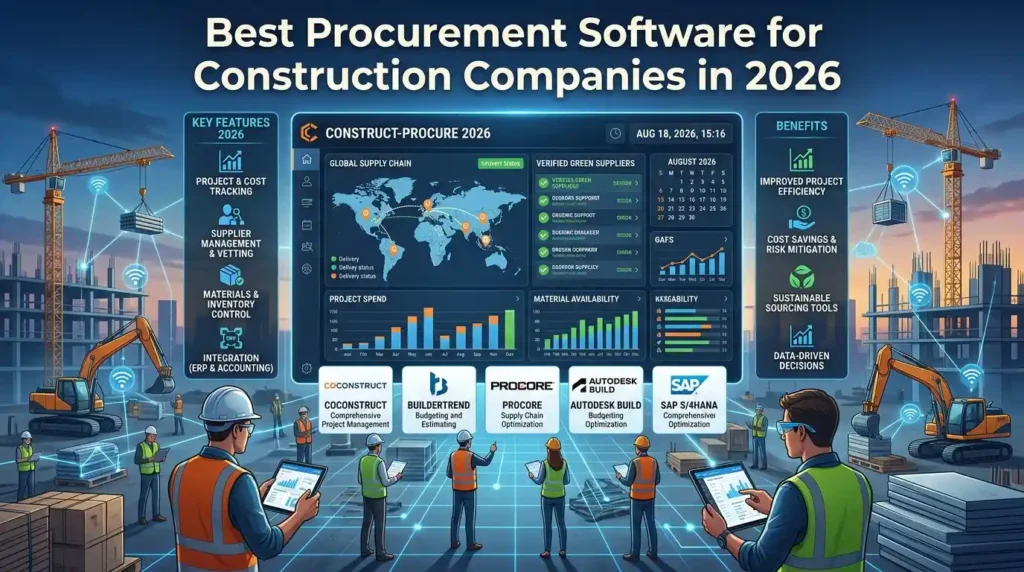
In 2026, contractors are still dealing with the same procurement pain points: site requests arrive in chats, supplier offers sit in email threads, approvals move slowly, and finance often sees a delivery after the commitment was already made. That breaks cost control, weakens visibility, and creates unplanned buying. For firms reviewing a construction ERP, this guide explains what procurement software for construction should do, which construction software categories matter in 2026, and how UAE contractors can choose the right fit.
What is construction procurement software?
This type of system manages purchase requisitions, approvals, supplier comparison, purchase orders, deliveries, and the link between buying activity and project cost data. Unlike a general purchasing tool, construction procurement software has to work at project level, so spend is tied to BOQ lines, budgets, cost structures, subcontractors, and warehouse balances instead of sitting only in the back office.
For a contractor, the main value is earlier control. Good procurement software for construction gives one record of what was requested, who approved it, what was ordered, what was received, and how that commitment affects budget and margin before the invoice arrives. For UAE contractors, FirstBit ERP is one example of this approach, connecting procurement with project costs, inventory, and financial records while supporting local VAT and e-invoicing requirements.
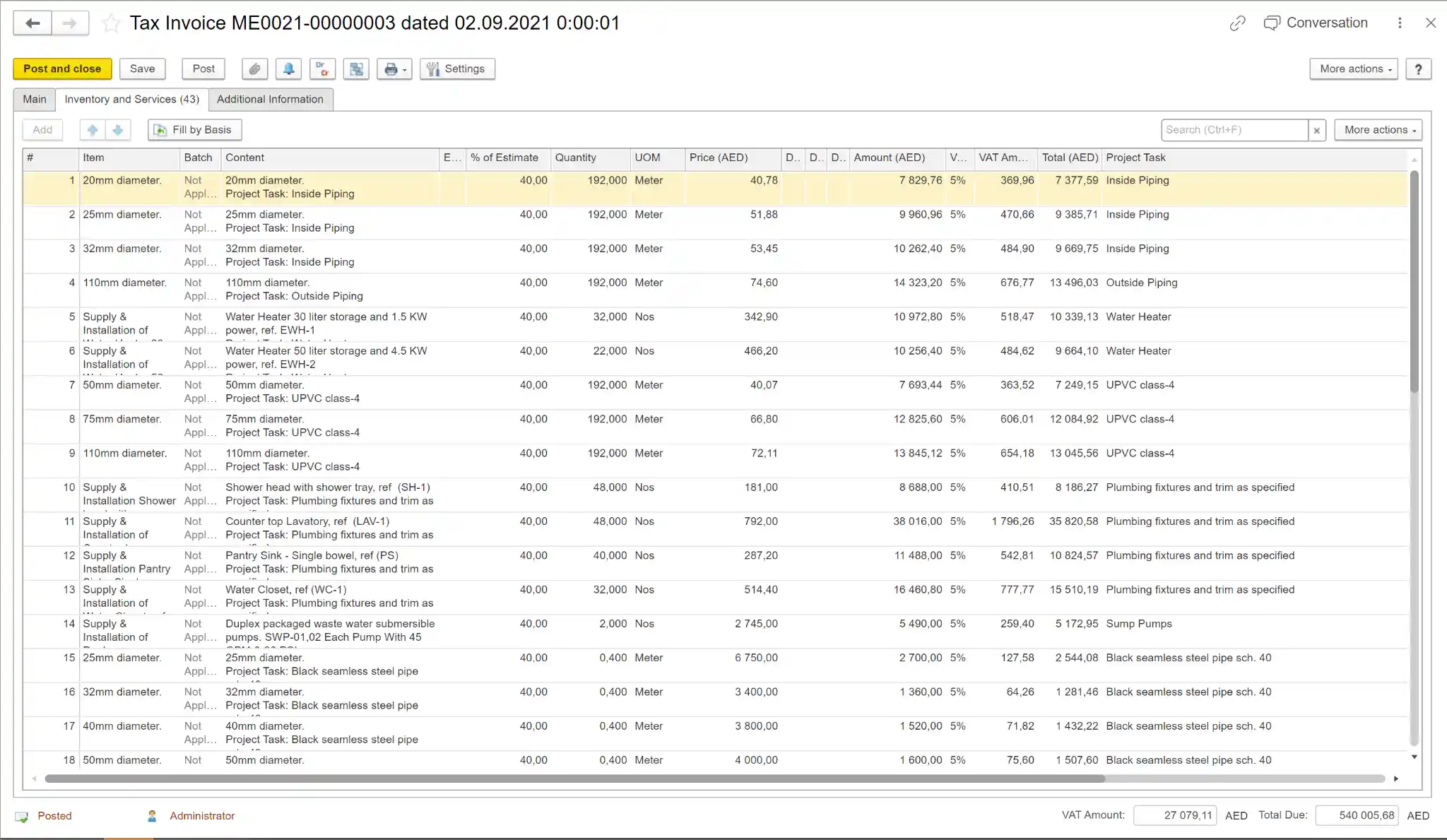
FirstBit ERP connects project-related invoice items with UAE VAT calculations and financial totals in AED
What features matter most in procurement software for construction companies?
The priorities are practical. The system needs clean requisitions and approvals, visible supplier management, RFQs and quote comparison, POs and receipt tracking, warehouse visibility across projects and stores, and a clear link to budgets, committed costs, bills, VAT handling, and reporting. Mobile access matters too, because field teams create requests and confirm deliveries from site, not from a desk.
If one of these layers is missing, teams start compensating with spreadsheets, calls, and after the fact reconciliation. That is why the strongest tools for contractors work as an operational control layer for materials, subcontractors, and project cost visibility.


Top procurement software solutions for construction in 2026
In 2026, procurement software solutions for contractors fall into three groups. Specialized construction tools go deep into jobsite and commercial workflows. Corporate source to pay platforms focus on governance and intake across larger organizations. ERP based options connect procurement with accounting, inventory, and project control in one data model.
Procurement inside ERP
FirstBit ERP is a construction ERP designed for contractors in the UAE. It connects procurement with warehouse management, project budgets, cost control, and finance, covering workflows such as requisitions, RFQs, supplier comparison, purchase orders, and materials tracking. The system also supports IFRS reporting, UAE VAT processes, and e-invoicing requirements. Best suited for: UAE contractors seeking an integrated ERP that connects procurement, inventory, project cost control, and financial management.
Oracle Fusion Cloud Procurement sits inside the wider Oracle ERP and SCM environment and includes sourcing, supplier records, self service procurement, orders, contracts, analytics, and AI assisted workflows. Best suited for: larger enterprises that need procurement tightly connected to broader ERP, supply chain, and finance processes.
Specialized construction tools
Procore supports subcontracts, orders, invoices, and real time contract status inside a broader construction platform used by main contractors, owners, and subcontractors. Best suited for: contractors already managing project execution and financial controls in Procore.
Kojo focuses on materials management and purchasing, with field teams sending requests from mobile and procurement staying aligned with site demand. Best suited for: trade and self perform contractors with high material volume.
Planyard centers on budgets, commitments, subcontractor workflows, approvals, and accounting integrations, with orders and supplier data managed from one platform. Best suited for: growing contractors that want stronger cost control without replacing accounting.
Corporate source to pay platforms
Ivalua provides intake, sourcing, supplier governance, procure to pay, and AI powered orchestration in one unified source to pay platform. Best suited for: larger multi entity organizations that need enterprise governance more than construction specific workflows.
Precoro focuses on purchase requests, approvals, orders, deliveries, invoices, and purchasing centralization for mid sized companies with distributed operations. Best suited for: mid market businesses that need fast rollout and tighter spend control.
What are the key procurement trends in construction for 2026?
The main 2026 trends are centralized control, cloud based access, AI and data extraction, and tighter integration between procurement, budgets, inventory, and finance. Current vendor positioning keeps moving toward one intake point for requests, connected approvals, faster document handling, and better committed cost visibility.
For UAE contractors, compliance is part of the same shift. The UAE Ministry of Finance defines an e-Invoice as structured invoice data exchanged electronically and reported to the Federal Tax Authority, while the FTA continues to publish VAT invoice guidance. That makes clean procurement records, supplier bills, and finance integration more important, not less.
FirstBit ERP as part of the UAE selection logic
The choice between standalone procurement tool and an ERP depends on how closely purchasing is tied to the rest of the business.
A standalone solution may work well when the main goal is to improve purchasing workflows. An ERP is a better fit when procurement decisions directly affect project costs, inventory, and financial reporting.
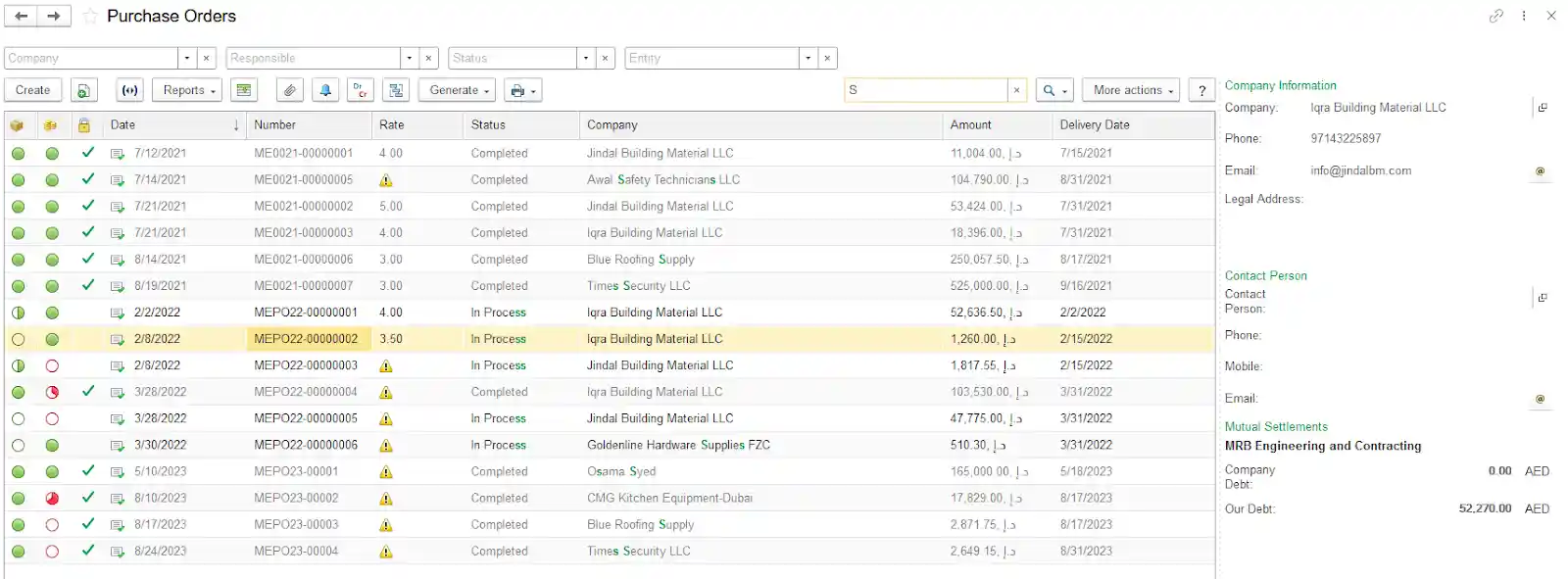
Purchase orders in FirstBit ERP with supplier, delivery, and settlement data available in the same workspace
For a contracting company in the UAE, the shortlist should be practical. Check whether the system links buying activity to BOQ based budgets, shows materials across warehouses and sites, supports approvals from field to office, and passes consistent data into VAT, e-invoicing, and financial reporting.
For UAE contractors, FirstBit ERP is most relevant where procurement cannot be separated from project budgets, warehouse balances, accounting, and local tax requirements. Its value compared with a standalone procurement tool is therefore less about individual purchasing features and more about keeping operational and financial data in one ERP environment.
FAQ
What is the difference between construction procurement software and a general procurement tool?
Construction procurement software is built around projects, BOQ or cost structures, subcontractors, deliveries, and site inventory. General procurement tools are stronger in broad spend governance, but they may need more integration to reflect project committed costs accurately.
Do contractors need procurement software if they already use accounting software?
Usually yes. Accounting software records transactions well, but contractors also need upstream control over requests, approvals, quote comparison, and deliveries before the invoice stage.
Can procurement software help control material costs on a project?
Yes, if it links requisitions, supplier choice, orders, receipts, and committed costs back to the project budget. That gives visibility before overspend becomes a finance problem.
How does procurement software support VAT and e-invoicing requirements in the UAE?
It helps by keeping purchase records, supplier invoices, and tax evidence consistent across procurement and finance. In the UAE, eInvoicing is defined by the Ministry of Finance as structured invoice data reported to the FTA, and FirstBit ERP states support for e-invoicing and FTA approved VAT compliance.
Conclusion: procurement control starts with one source of purchase data
Material overspend is often less about supplier pricing and more about fragmented data. When requests, approvals, orders, receipts, and finance records live in different places, contractors lose visibility long before month end. The better choice is usually the tool that gives procurement, cost control, and compliance one connected operating record. Explore how this construction software can support your specific business needs.
Related Reading: خصومات وعروض عيد الفطر من هواوي: اقتن الفرصة لتوفير حتى 1400 ريال سعودي!
Related Reading: The 2026 Flagship Shift: Why Performance Stability is the New Benchmark for Premium Smartphones
Related Reading: The Modern Laser Machine: A Complete Guide for Businesses and Creators — full guide