Introduction
If your sofa, dining chairs, curtains, or wooden furniture are covered in claw marks, you may be wondering how to stop cats from scratching furniture without making your cat unhappy. The good news is that scratching is normal feline behaviour, not a sign that your cat is being deliberately destructive. Cats scratch to maintain their claws, stretch their bodies, mark territory, and release energy.
The most effective approach is not to eliminate scratching but to redirect it. A properly selected and positioned scratching post can make a huge difference. The key is to understand what your cat likes, place the scratching surface where your cat already wants to scratch, and reward the behaviour you want to see.
This guide explains how to set up a scratching post correctly, make furniture less attractive, and create a home where your cat can satisfy its natural scratching instinct without destroying your belongings.
Why Do Cats Scratch Furniture?
Before learning how to stop cats from scratching furniture, it helps to understand why they do it. Scratching serves several purposes, so simply telling a cat “no” rarely solves the problem.
Cats use scratching to remove the worn outer layers of their claws and expose healthier claw surfaces. The movement also provides a useful stretch for the shoulders, legs, back, and paws.
Scratching also has a communication purpose. Cats have scent glands in their paw pads, meaning scratching can leave both a visible mark and a scent signal. This is one reason cats may repeatedly scratch prominent areas such as sofas, doorways, or furniture near entrances.


Furniture can be especially attractive because it is usually stable, textured, and located in areas where people and other pets spend time. In other words, your cat may simply have discovered that the sofa is an excellent scratching surface.
The solution is therefore to offer something that satisfies the same needs.
How to Stop Cats from Scratching Furniture
The best strategy is redirection rather than punishment. You want your cat to think, “This is where I scratch,” rather than simply learning that scratching becomes unpleasant when a person is nearby.
The ASPCA recommends providing appropriate scratching surfaces and choosing posts according to a cat’s preferred material, orientation, and scratching style.
Choose the Right Scratching Post
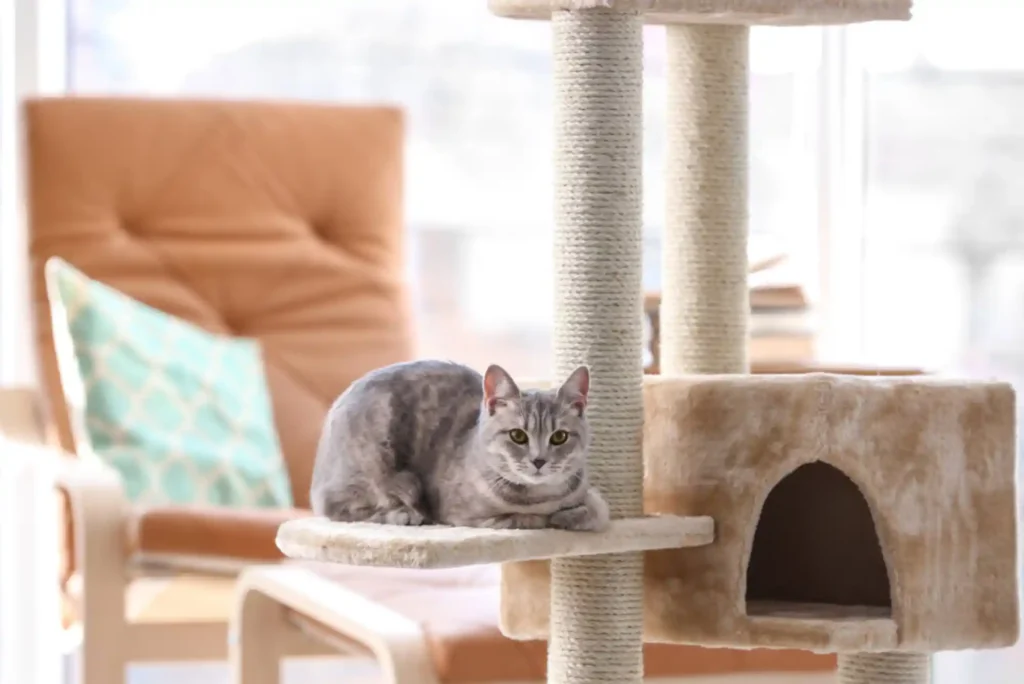
A scratching post should be strong enough to withstand your cat’s full body weight. If it wobbles, tips over, or slides across the floor, your cat may quickly abandon it.
Height matters particularly for cats that scratch vertically. A suitable vertical post should allow the cat to stretch almost completely from nose to toes while scratching. The ASPCA recommends a sturdy scratching post at least three feet high for cats that prefer vertical scratching.
Material is equally important. Some cats love sisal, while others prefer corrugated cardboard, wood, carpet, or another textured surface. If your cat consistently scratches a particular type of furniture, consider choosing a scratcher with a similar texture.
For example, a cat that attacks a fabric sofa may not immediately fall in love with a rough sisal tower. A fabric-covered scratcher or horizontal cardboard pad may be a better starting point.
Match the Post to Your Cat’s Scratching Style
Watch your cat for a few days before buying several expensive scratchers. Does your cat stand on its back legs and rake downward? Does it lie on the floor and scratch horizontally? Does it scratch the side of the sofa or the carpet underneath it?
The answer tells you what type of scratching surface to provide.
A cat that scratches vertically will probably respond better to a tall, stable post. A cat that scratches carpets may prefer a horizontal scratching pad. Some cats enjoy both, so having more than one type can be useful.
There is no universal “best” scratching post. The best one is the surface your individual cat actually wants to use.
Scratching Post Placement Is Crucial
One of the biggest mistakes owners make is putting a scratching post in an isolated corner and expecting the cat to find it.
Location can determine whether your cat uses the post or continues attacking the furniture. The Humane Society of the United States specifically recommends putting a scratching post next to the couch if that is where the cat likes to scratch.
Place the Post Next to the Furniture
If your cat scratches one particular corner of the sofa, put the scratching post directly beside that corner. Initially, you may even position it so that it partly blocks access to the preferred scratching area.
Once your cat consistently uses the post, you can gradually move it a small distance away if necessary.
This works because you are not asking your cat to change everything at once. You are simply replacing one scratching surface with another in the same location.
Use Sleeping Areas to Your Advantage
Cats often stretch and scratch after waking up. This makes the area near a favourite sleeping spot another excellent location for a scratching post.
A cat bed, window perch, or favourite resting area can therefore become part of your scratching-post strategy.
For households with several cats, multiple scratching areas can be particularly helpful. A cat may prefer one location for scratching after waking and another for territorial marking.
Make the Scratching Post More Attractive
Even a perfectly positioned scratching post may need a little encouragement.
You can make the post more interesting by placing a favourite toy nearby or using play to encourage your cat to approach it. Some cats respond well to catnip, although not every cat is affected by it.
When your cat voluntarily scratches the post, reward the behaviour with calm praise, attention, or a small treat. The goal is to create a positive association with the scratching surface.
Never force your cat’s paws onto the post. The ASPCA warns against physically dragging a cat’s claws across a scratching post because this can frighten the cat and make it avoid the post.
How to Protect Furniture While Training Your Cat
Training takes time, so protect your furniture while your cat learns its new habit.
A temporary furniture cover can make the old scratching area less convenient. Double-sided furniture-safe tape can also discourage scratching because many cats dislike the sticky sensation.
You can also place the new scratching post directly in front of the damaged area. Once the cat starts choosing the post, the protective covering can gradually be removed.
The important point is that deterrents should work alongside an attractive alternative. If you make the sofa unpleasant but provide nowhere appealing to scratch, your cat may simply find another piece of furniture.
For additional guidance on redirecting scratching behaviour, see these Cat Scratching Fixes.
Should You Trim Your Cat’s Claws?
Regular nail trimming can reduce the amount of damage caused by scratching, but it does not replace a scratching post.
Cats still need to scratch even when their claws are trimmed because scratching provides stretching, exercise, marking, and natural claw maintenance. The ASPCA recommends regular nail trimming and notes that keeping claws relatively blunt can reduce damage to people and furniture.
If you are unfamiliar with trimming claws, ask your veterinarian or a qualified professional to demonstrate the technique. Only the sharp tip should be removed; cutting into the sensitive inner portion of the claw can cause pain and bleeding.
Never use declawing as a furniture-management strategy. Declawing is not simply a nail trim and is not an appropriate behavioural solution for scratching problems.
What If Your Cat Still Scratches the Sofa?
If your cat ignores the scratching post, do not assume that scratching posts “don’t work.” The problem may be the design, material, stability, or location.
Try observing exactly what your cat likes about the sofa. If the cat stretches vertically against the arm, choose a taller post. If it scratches the carpet beside the sofa, introduce a horizontal scratcher. If the cat digs its claws into soft upholstery, experiment with a scratching surface that offers a comparable texture.
You can also increase the number of scratching options around the home. A cat may need a scratcher near the living room, another near its sleeping area, and another in a frequently used hallway.
Consistency matters. Every time your cat chooses the appropriate surface, reinforce that choice rather than reacting only when the cat scratches furniture.
Can Stress Cause More Scratching?
Sometimes scratching becomes more noticeable after changes in a cat’s environment. Moving house, introducing another pet, changing routines, or conflict between cats can influence territorial behaviour.
Excessive scratching around windows, doors, or other boundaries may sometimes indicate insecurity or environmental stress. Woodgreen Pets Charity notes that increased scratching around doorways and windows can be associated with a cat feeling insecure.
In these circumstances, simply adding another scratching post may not address the whole problem. Give your cat predictable routines, safe resting areas, play opportunities, and places where it can retreat from other animals.
For behavioural concerns, your veterinarian can help determine whether stress, conflict, or another underlying issue is contributing to the behaviour.
Consider Pheromone Support
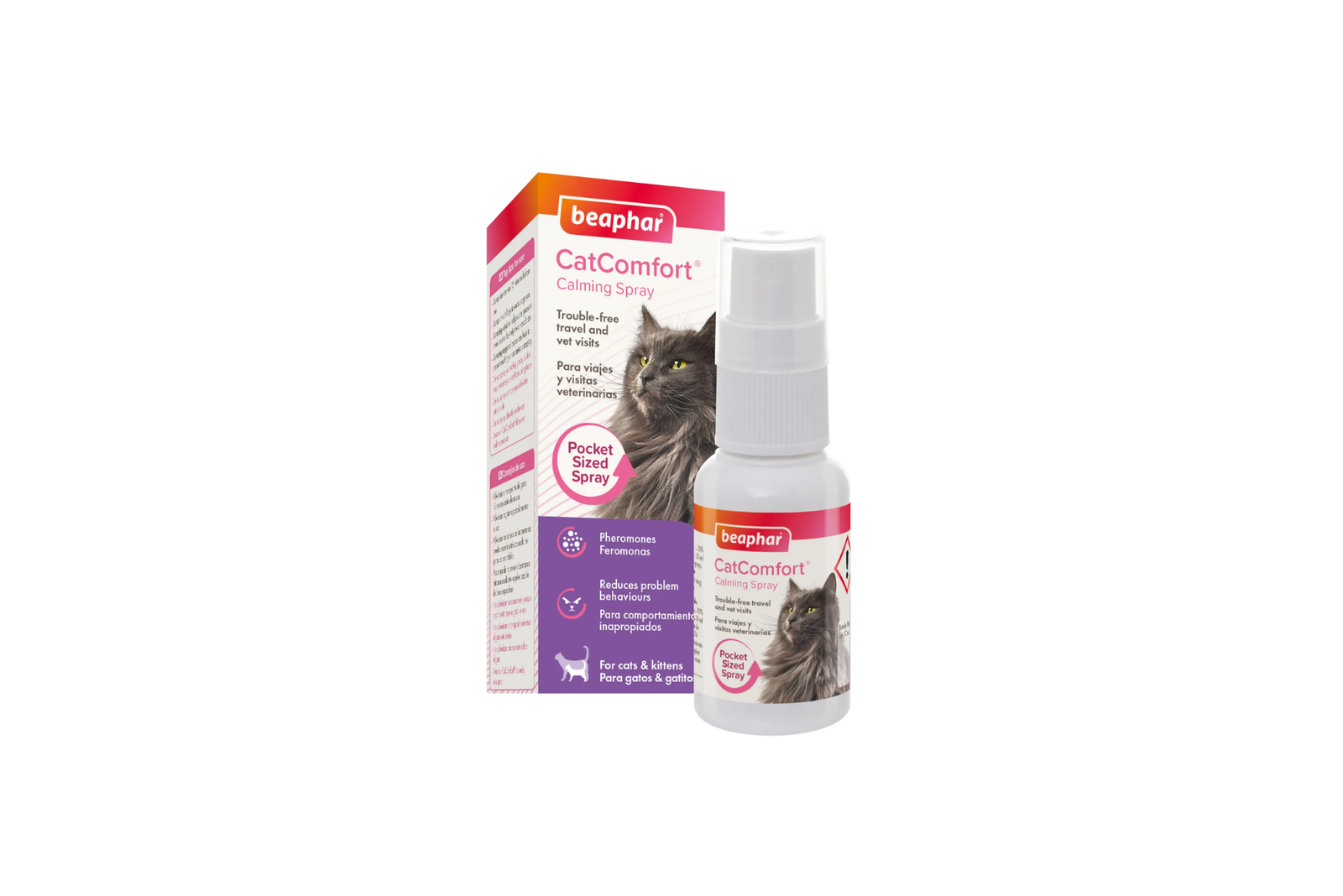
Pheromone products may be useful as part of a broader behaviour-management plan when stress appears to contribute to unwanted scratching. They should not be viewed as a replacement for appropriate scratching surfaces and environmental enrichment.
For reliable information about cat behaviour and welfare, you can also consult Pheromone Therapy for Cats and discuss persistent behaviour changes with a veterinarian.
How Long Does It Take to Change Scratching Habits?
There is no fixed timeline because cats learn at different rates. Some quickly switch to a new scratching post when it is placed beside their favourite furniture. Others need several weeks of consistent redirection.
Avoid moving the post too quickly or giving up after a few days. If your cat has spent months scratching one sofa, that location has already become a strong habit.
Think of the process as changing a preference rather than correcting bad behaviour.
Keep the preferred furniture protected, maintain an appealing scratching surface nearby, and reward your cat when it makes the right choice. Once the new habit becomes established, you can gradually adjust the arrangement.
Common Scratching Mistakes to Avoid
Punishment is one of the most common mistakes. Yelling, chasing, or frightening a cat may stop scratching temporarily when you are present, but it does not teach the cat what to do instead. It can also make your cat wary of you.
Another mistake is buying a post that is too short or unstable. If your cat cannot stretch properly or the post falls over, it has little reason to abandon a comfortable sofa.
Do not throw away a well-used scratching post simply because it looks worn. Cats often like scratched and shredded surfaces because they provide familiar scents and textures. The ASPCA specifically advises against replacing a favourite post merely because it looks untidy.
Finally, avoid relying on a single scratcher if your cat has multiple favourite scratching locations. Strategic placement is often more effective than buying one premium post and putting it somewhere your cat rarely visits.
Build a Cat-Friendly Scratching Routine
The most successful approach is to make appropriate scratching easy and rewarding.
Place scratching surfaces where your cat naturally spends time. Match the height and orientation to the cat’s preferred movement. Choose a material that feels satisfying under the claws. Keep the post stable. Protect furniture temporarily while the habit changes, and reward your cat for choosing the correct surface.
Remember that scratching is a normal part of being a cat. Your goal is not to remove this behaviour but to give it an appropriate outlet.
If you are looking for more pet-care resources and practical cat guidance, visit Garlic for additional information.
Make the Right Scratching Choice Easier
Learning how to stop cats from scratching furniture becomes much easier when you stop treating scratching as bad behaviour. Cats have a natural need to scratch, and furniture often becomes the target because it provides the right texture, stability, location, and height.
A well-designed scratching post placed beside the problem furniture can redirect that instinct surprisingly effectively. Combine the right post with positive reinforcement, temporary furniture protection, regular claw care, and an environment that reduces stress.
FAQs
How do I stop my cat from scratching my furniture?
Place a sturdy scratching post directly beside the furniture your cat scratches, preferably matching its preferred height and texture. Reward the cat for using the post and temporarily cover or protect the furniture. Scratching should be redirected rather than completely stopped because it is normal feline behaviour.
What can I put on my couch to stop my cat from scratching it?
A temporary furniture cover or appropriately designed double-sided sticky tape can make the scratching area less appealing. At the same time, place an attractive scratching post beside the couch so your cat has an acceptable alternative.
Why does my cat scratch the furniture even though it has a scratching post?
The existing post may be too short, unstable, poorly positioned, or made from a material your cat dislikes. Try placing it directly beside the furniture and experiment with different orientations and textures.
How tall should a cat scratching post be?
For a vertical scratcher, it should be tall enough for your cat to stretch its body comfortably while scratching. The ASPCA recommends a sturdy vertical post of at least three feet for cats that prefer this style.
Do cats eventually stop scratching furniture?
Cats generally do not stop needing to scratch. However, they can learn to use appropriate scratching surfaces instead of furniture. Consistent placement, suitable scratching materials, and positive reinforcement can help establish the new habit.
Does catnip stop cats from scratching furniture?
Catnip may make a scratching post more interesting to some cats, but it does not work for every cat. It is best used to encourage interest in an appropriate scratching surface rather than as a direct furniture deterrent.
Should I punish my cat for scratching furniture?
No. Punishment can create fear without teaching the cat where scratching is appropriate. Redirect the cat to a suitable scratching surface and reward the desired behaviour instead. The ASPCA advises against forcing cats to scratch or using frightening methods as the primary solution.
Do pheromones help cats stop scratching furniture?
Pheromone products may help when stress or territorial insecurity contributes to scratching, but they should be considered alongside environmental changes and suitable scratching outlets. If scratching suddenly increases or is accompanied by other behavioural changes, consult a veterinarian.
Related Reading: How to Prevent and Treat Hairballs in Indoor Cats